

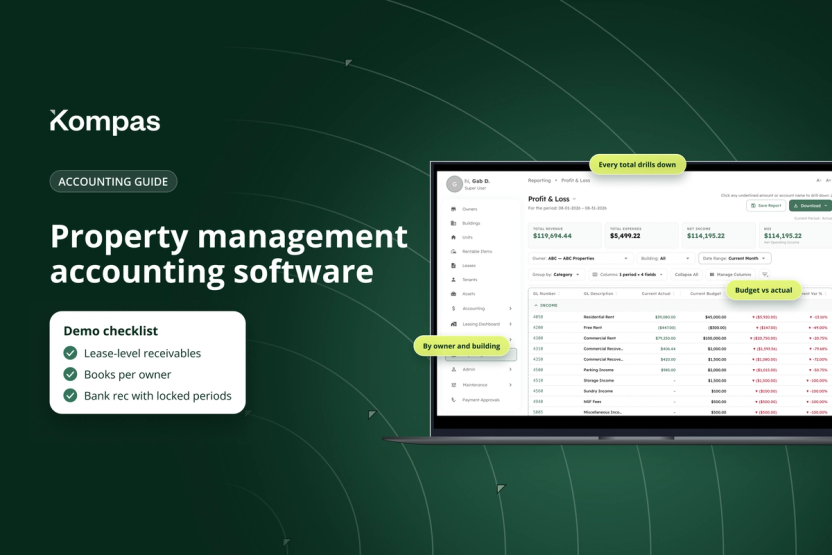
Property management accounting: how to close the month without the spreadsheet scramble
The monthly cycle, the four tie-outs that prove your books are right, and why month-end drags when rent, payments and the ledger live in different places.
It's the fifth business day and the books still aren't closed. Rent came in four different ways, the rent roll in one tool disagrees with the ledger in another, and someone is in a spreadsheet working out which tenant a deposit belongs to. The accounting usually isn't the hard part. The data is just in too many places.
This guide explains how property management accounting works in Canada, the four checks that prove your books are right, and what changes when rent, payments and the ledger live in one system.
What is property management accounting?
Property management accounting is the bookkeeping a property manager does on behalf of property owners. It records rent and other charges by lease, payments received, vendor bills and bank activity, then reports the results by owner and by building.
It differs from general business accounting because the money belongs to more than one party. A manager can run dozens of owner entities, each with its own bank accounts and financial statements, and every dollar has to trace back to a lease, a building or a vendor invoice.
What does property management accounting cover?
Five areas: receivables by lease, payables to vendors, bank accounts and reconciliation, sales tax, and reporting by owner and building. Each one has a check that proves it is right.
| Area | What it tracks | The check that proves it |
|---|---|---|
| Receivables | Charges and payments, lease by lease | Tenant balances add up to the receivables control account |
| Payables | Vendor invoices coded to a building, approved and paid | Every paid invoice has an approval and a building code |
| Banking | Each owner's bank accounts, tied to the ledger | Reconciled to the bank statement every month |
| Sales tax | GST, HST, PST or QST on commercial rent and expenses, and input tax credits | A sales tax reconciliation before you file |
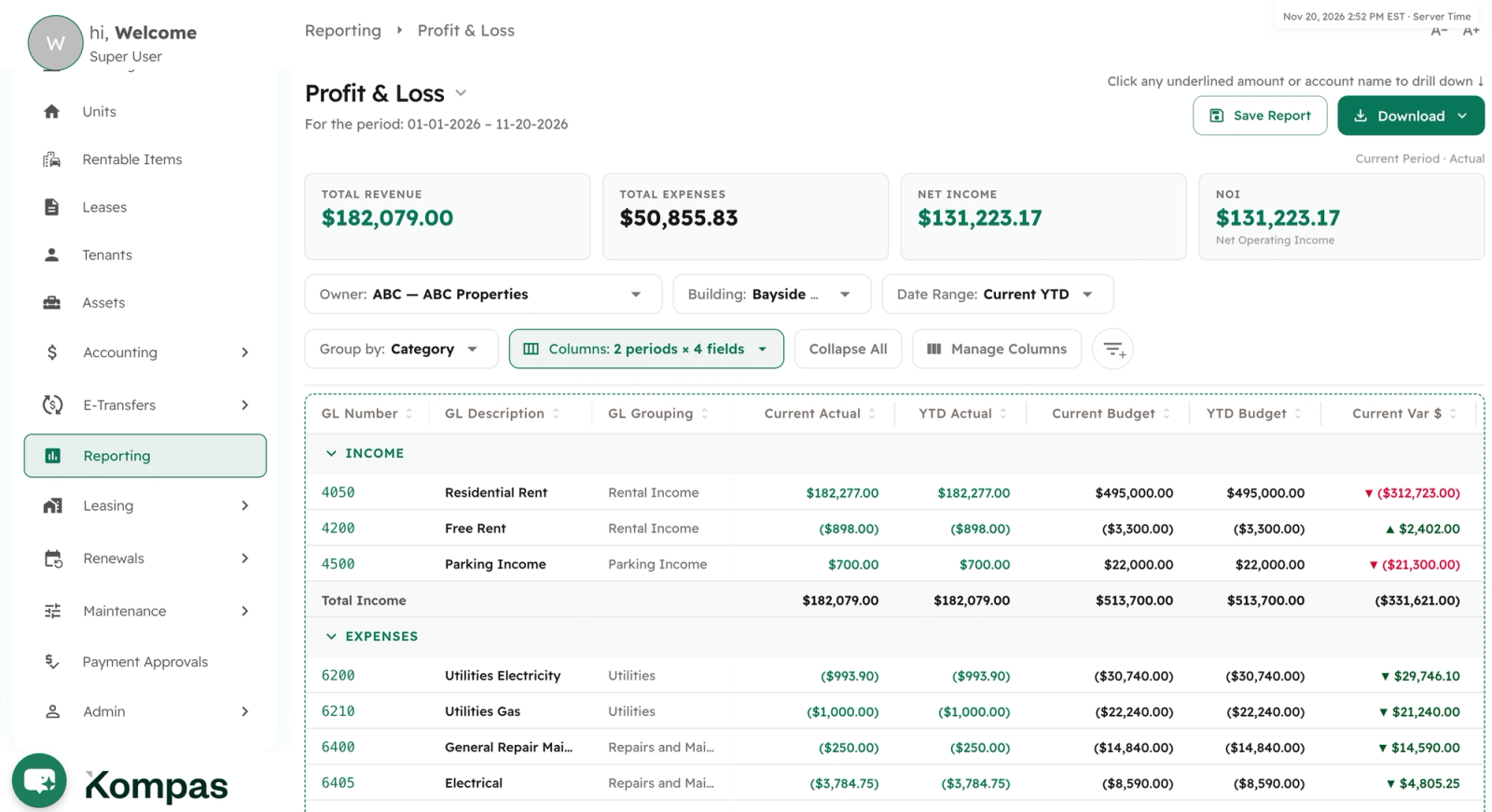
| Reporting | Profit and loss, balance sheet, trial balance, aging, rent roll | Every total drills down to the transactions behind it |
Residential rent is generally exempt from sales tax, so mixed-use buildings need care. Confirm the treatment with your accountant.
How does the monthly accounting cycle work?
Every month runs the same loop: bill, collect, pay, reconcile, review, lock. The order matters, because each step feeds the next.
- Bill: rent and recurring charges post to each lease, usually on the first.
- Collect: payments are applied to the right lease and recorded in the bank account they landed in, whether you're collecting rent online or by cheque.
- Pay: vendor invoices are entered, coded to a building, approved and paid.
- Reconcile: each bank account is compared with its statement. Outstanding items explain any difference.
- Review: profit and loss by building, aging and the trial balance are checked for anything that looks off.
- Lock: the period is closed, so nothing changes behind numbers you have already sent to owners.
Why does month-end take so long?
Month-end drags when accounting, the rent roll and payments live in different places. Someone has to move data between them by hand, and every hand-off is a chance for a mismatch.
What it looks like in practice
- Unlabelled payments: rent collected by Interac e-Transfer arrives with no reference and gets matched to leases one by one.
- Two versions of the truth: the rent roll in one tool disagrees with the ledger in another.
- A shared spreadsheet: three people edit it, and nobody is sure which version is current.
When your accounting software wasn't built for real estate, you keep a separate rent roll beside it, so reconciliation is manual by definition.
“The fix isn't a better spreadsheet. It's removing the hand-offs.”
How can you tell your books are right?
Run four tie-outs every month. If all four hold, your books are right. If one fails, it tells you where to look.
- Receivables tie out: the total of all tenant balances equals the receivables control account on the trial balance.
- The bank ties out: the ledger balance, adjusted for outstanding deposits and payments, equals the ending balance on the statement. The difference should be exactly zero.
- Aging ties to the ledger: the receivables aging report totals the same figure as the general ledger.
- Closed means closed: once a month is reconciled and locked, changing it means reopening it first, so reports you've already sent don't quietly change.
How does Kompas handle property management accounting?
Kompas is accounting-first. Every charge, payment and vendor invoice posts to the general ledger as it happens, so the ledger is the source for every report and there is no second system to reconcile against.
The tie-outs, built in
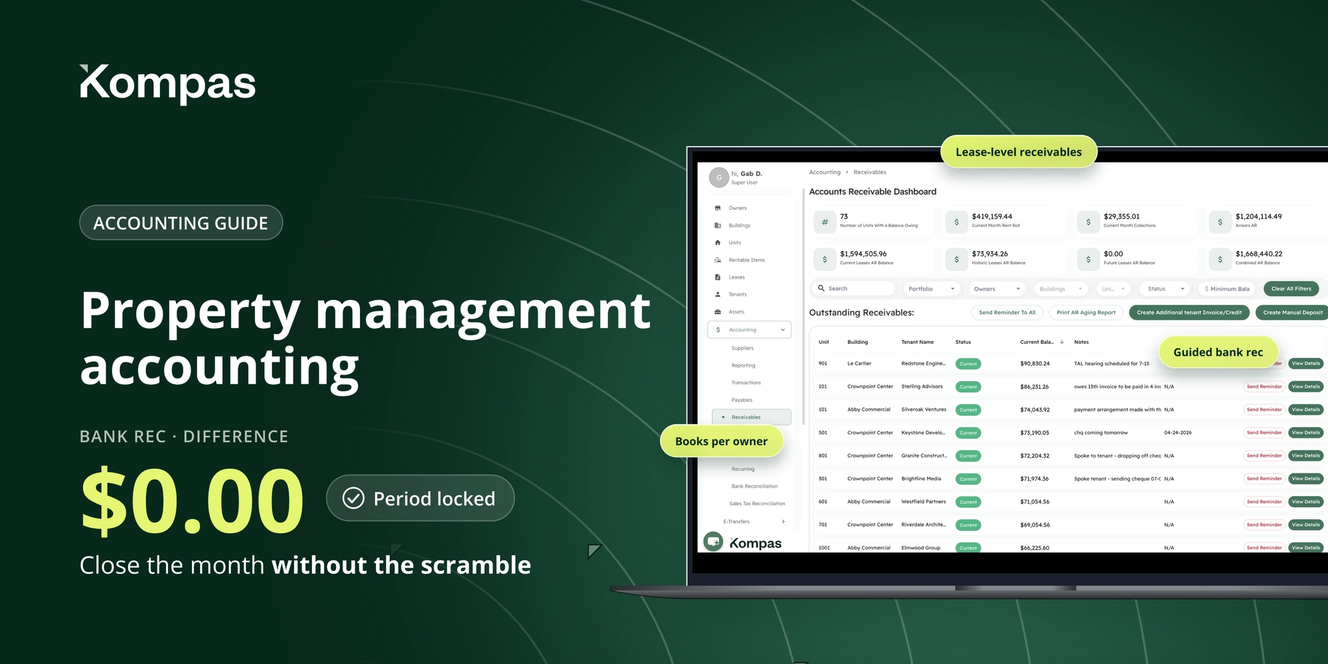
- Lease-level receivables: each lease has its own ledger, and tenant balances roll up to the receivables control account.
- Books per owner: each owner has its own chart of accounts and bank accounts, each mapped to its own ledger account.
- Guided bank reconciliation: a seven-step month-end workflow ends in a PDF report and a locked period. A period locks only when the difference is $0.00.
- Locked periods: once a period is locked, back-dated entries are blocked, manual journals included.
Less to key in on the first
- First of the month, automated: rent charges, PAD pulls and recurring entries run on the first, with the accounting posted for you.
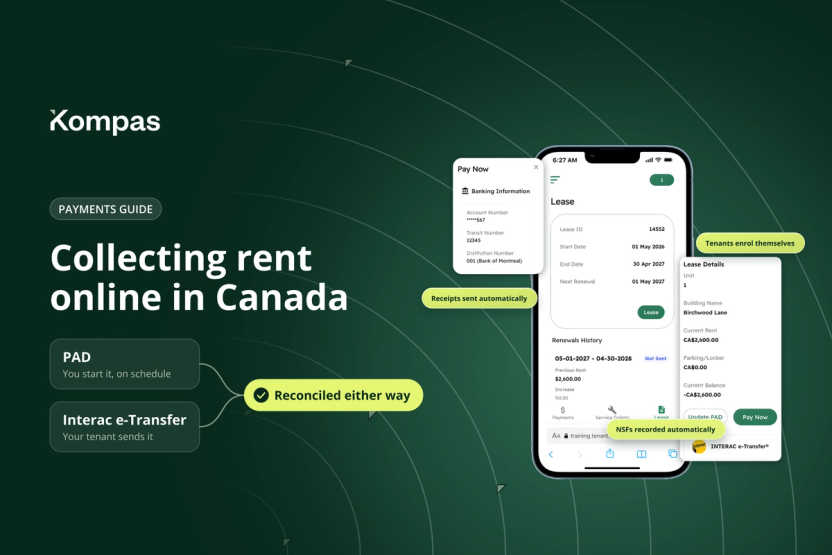
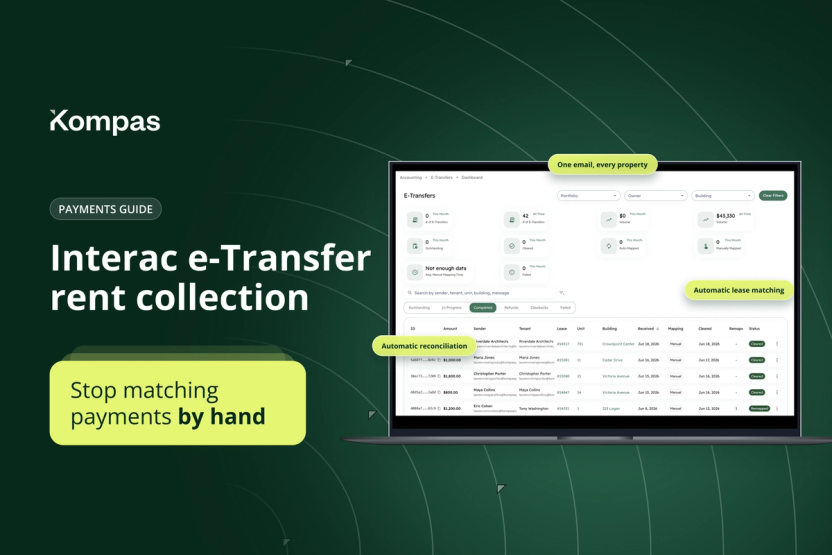
- Payments that reconcile themselves: PAD, EFT and Interac e-Transfer payments reconcile automatically when they clear. Cash and cheques are marked by hand.
Reports owners can read
- The core set: trial balance, balance sheet, profit and loss, general ledger detail, AR aging, AP listing, rent roll and budget reports export to PDF or Excel and can be emailed on a schedule.
- Canadian sales tax: GST, HST, PST and QST on commercial leases and expenses, with a sales tax reconciliation.
- Year-end close: closing entries are generated from the year-end date on the owner record.
- Difference needed to lock a period
- $0.00
- No exceptions
- Guided bank reconciliation
- 7 steps
- Ends in a PDF report
- Ready to export
- 8 reports
- PDF or Excel
Kompas is built for residential, commercial, student and mixed-use portfolios.
Watch a month close in Kompas, from the first of the month to a locked period.
See it liveFrequently asked questions
Regular accounting tracks one business. Property management accounting tracks many owners' money side by side, with receivables by lease, expenses by building and a separate set of financial statements for each owner.
It's the detail behind the receivables balance: one running balance per tenant or lease. The total of all of them should equal the receivables control account in the general ledger.
At least monthly. Reconcile each account against its statement at month-end, and lock the period once the difference is zero.
Most owners expect a profit and loss statement by building, a balance sheet, receivables aging and a rent roll. Requirements vary by management agreement, so confirm what each owner expects.
Commercial rent and many expenses carry GST or HST, plus QST in Québec, and you can claim input tax credits on eligible expenses. Residential rent is generally exempt, so mixed-use buildings need care. Confirm the treatment with your accountant.
Yes. Software records transactions and produces reports. An accountant advises on tax, year-end and compliance, and checks that the books reflect your agreements with owners.
Newsletter
GET THE NEXT GUIDE IN YOUR INBOX
Practical guides for property managers on accounting, payments and leasing. One email a month.